steve-snell dog training collar reviewsTri-Tronics dog training collarsfree shipping on gun dog training supplies on $125+ Orders US48
search 3500+ dog supplies pages
gun dog supply shipping infogun dog supply shopping cart
     HOME page > Books and Magazines > E-collar Books  > Tri-Tronics Retriever Training    
Code: 0603

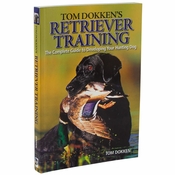
Tri-Tronics Retriever Training Book pad

Tri-Tronics Retriever Training is our best selling Ecollars book.

List: $29.95
Order Yours: $26.95
Code: 0603
Qty:
Usually ships the same business day.
You Save $3.00

Read more about the Tri-Tronics Retriever Training Book

249 pages. Illustrated.

To use the program described in this book, you should have a remote training collar with continuous stimulation, variable intensity, and selectable intensity at the transmitter.

When and how to use your Tri-Tronics collar for each stage of training. Over 200 photographs plus detailed handling drill diagrams. Covers field work, marking skills, hunting situations and handling program.

To use the program described in this book, you should have a remote training collar with continuous stimulation, variable intensity, and selectable intensity at the transmitter. We prefer the Tri-Tronics Pro 100 and Pro 500 models for this type of training because these models have lower levels of selectable continuous stimulation than the Flyway Special, Pro 200, Upland Special, Sportsman or Companion.

  • Continuous Stimulation - The stimulation stays on as long as the transmitter button is held down up to a maximum of 8-10 seconds.

  • Variable Intensity - The trainer can change the level of intensity of stimulation by changing an intensity plus, a contact point, a dial on the transmitter or selecting a different key (button).

  • Selectable Intensity at the Transmitter - The handler can modify the stimulation level by pressing different buttons or keys on the transmitter.


  • Tri-Tronics Retriever Training presents, for the first time, a thorough explanation of the proper use of Tri-Tronics electronic collars in training retrievers. The techniques emphasize humane methods based on a solid foundation of canine psychology.

    Jim and Phyllis Dobbs and Alice Woodyard take the reader through their step-by-step program for retriever training which emphasizes, above all, "making it easy for dogs to learn."

    Included are sections on how to select a pup with good working potential and how to get started early with "puppy headstart" training that awakens the pup's desire to learn. The reader is then carefully educated on the proper introduction of the Tri-Tronics collar. The collar introduction program utilizes Jim and Phyllis' highly successful techniques for teaching reliable responses to commands, while not impairing the dog's enthusiasm and style.

    The book covers in detail how to proceed with the young retriever's field work, develop its marking skills, prepare it for hunting situations and finally advance it through a handling program. The important question of when and how to use the Tri-Tronics collar and when not to use it is answered for each stage of training. Over 200 photographs, together with detailed diagrams of the handling drills, are also included.

    This book is written particularly for the retriever owner who wants to train his own dog for hunting, hunting tests and field trials. In addition, anyone interested in knowing more about how electronic training collars can be used to enhance effective dog training will want to take advantage of this book.

    Jim and Phyllis Dobbs were the directors of the Tri-Tronics Training Center in Marysville, California. They are expert dog trainers who train many types of working dogs to advanced levels, and have competed successfully both nationally and internationally. They work with handlers and their dogs in such fields as pointers, retrievers, spaniels, hounds, schutzhund, police dogs, assistance dogs, stockdogs, companion and competition obedience dogs.

    Based on their extensive knowledge of dog training and the adaptability of the Tri-Tronics products, they have developed training methods that are logical and extremely effective. With their students at the Training Center, in their seminars, and now in this book, Jim and Phyllis demonstrate how electronic training collars should be used to produce happy, confident and willing retrievers.

    Alice Woodyard has been working with the Training Center for nine years, and has co-authored several articles on electronic odg training with Jim and Phyllis. She has titled retrievers at all levels of the AKC and NAHRA hunting test programs and competes successfully in licensed field trials, utilizing training techniques developed by Jim Phyllis and now described in this book.

    "Tri-Tronics Retriever Training covers training how, when, where and why in more detail and with greater clarity than any book I have read or any video I have seen." -- Charles Breslin

    "Don't let the word 'Retriever' fool you, this book is an excellent book for many facets of dog training including conventional methods." -- Art Rodger "Spaniels in the Field," Cincinnati, OH

    CONTENTS

    About Jim and Phyllis Dobbs xvi
    About Alice Woodyard xvii

    Chapter 1 Introduction 1
    Why Dogs Work 1
    A Step By Step System 2

    Chapter 2 The Tri Tronics Training Collar 3
    The History of Electronic Collars 3
    How Tri Tronics Collars Work 5
    Features of the Tri Tronics Collar 5
    Why Use Different Intensity Levels? 5
    Continuous vs Momentary Stimulation 6
    Praise Button 7

    Chapter 3 How to Pick Pup 9
    Socializing the Pup 11

    Chapter 4 Beginning Training 13
    The Puppy Headstart Program 13
    Why Use Food Rewards for Pups 13
    Teaching the "Sit" Command 14
    Teaching the "Down" Command 15
    Teaching the "Here" Command 16
    Teaching the "Kennel" Command 16
    Puppy Retrievers 17
    Introducing the Leash 18
    Teaching the "Heel" Command 19
    Teaching the Meaning of "Break" 20
    The "Good Dog" Reward 20
    Teaching the Meaning of "NO" 20
    Teaching the "Sit Whistle" 20
    Teaching the "Come In Whistle" 21
    Teaching the "Look" Command 22
    The Training Table 23
    Teaching the "Over" Command 23
    Is the Pup Left of Right Handed? 25
    Teaching the Left and Right Hand "Back"

    Commands 26

    Chapter 5 Lessons for the Hunting Puppy 27
    Teaching the "Find It" Command 28
    Teaching the Hunt Whistle 29
    Look Where the Gun is Pointed 30
    Retrieving Underwater 31
    Introduction to Boats 31
    Teaching the "Shake" Command 32

    Chapter 6 Developing Retrieving Desire 35


    Chapter 7 Introduction to Water 37

    Chapter 8 Introduction to Gunfire 41

    Chapter 9 Unwanted Barking and Other Misbehaviors
    How to Stop Barking 43
    How to Stop Unwanted Behaviors 44

    Chapter 10 Completing the Teaching Phase 45


    Chapter 11 Beginning Electronic Training 47
    Train to Develop Willingness to Obey 47
    Always Teach the Command First 48
    Start with the Three Action Introduction 48
    Guide the Beginner 50
    Make Training Fun for the Dog 51
    Have the Tri Tronics Collar on the Dog 51

    Chapter 12 The Correct Timing of Stimulation 53
    When to Start Stimulation 53
    When to Turn Off Stimulation 53
    When to Phase Out Stimulation 54
    When to Increase Stimulation 55
    Use of the Timing Monitor 55

    Chapter 13 Fitting the Collar on the Dog 57

    Chapter 14 Choosing the Correct Intensity Plug 59
    Determining Sensitivity Level 60
    Using Higher Intensity Plugs 60


    Chapter 15 Conditioning Praise Tone 61

    Chapter 16 The Three Action Introduction 63
    Week One - The First Action (Moving Toward the Handler) 64
    Training the Dog to Bend with the Collar 64
    Training the Dog to Come with Collar 65
    Training "Heel" with the Collar 66
    Teaching the Dog to Respond to "Break" 68
    Teaching Changes of Pace and Turns 69
    When to Increase Intensity in the First Action 69
    Increasing Distractions 70
    The Avoidance Response 70
    Teaching the Dog to Respond to the "Come In Whistle" 71


    Week Two - The Second Action (Moving Away from the Handler) 71
    Training "Kennel" with the Collar 71
    Teaching the Dog Accept Praise 73
    Teaching the Dog to Turn Off Stimulation by
    Leaving Your Side 73
    Teaching the Dog to Turn Off Stimulation by
    Taking a Cast 75
    Transition to the Avoidance Response 76
    The "Place" and "Stay" Commands 76
    The "Place" Command 76
    The "Stay" Command 77


    Week Three - The Third Action(Becoming Stationary) 78
    Training "Sit" with the Collar 78
    "Sit" from Motion 79
    Transition to the Avoidance Response 81
    Reinforcing the "Sit Whistle" 82
    Steadying 84
    Retrieving from a Remote Location 85
    Training "Down" with the Collar 86

    Chapter 17 The Trained Retrieve 89
    Teach the "Hold" Command First 89
    Mouth Problems 90
    Introducing the Training Table 91
    Introducing the "Drop" Command First 92
    The "Hold" Command 92
    Holding the Dumbbell 93
    Holding Different Retrieve Objects 94
    Hold, Carry and Deliver 96
    The Fetch Command 97
    Fetching Various Objects 97
    Vary the Form of Pressure 97
    Reinforcing "Fetch" with the Tri Tritronics Collar 99
    "Fetch" Off the Ground 101
    Introducing Live Birds 101
    The "Back" Command 102
    Developing a Quick Pick up and a Prompt Return 103
    "Back" and "Over" into Water 104

    Chapter 18 Sit to Flush 107
    Use a Bird Launcher 107
    Shot Fliers 110


    Chapter 19 Beginning Marking 113
    Some Things to Remember When Setting Up a
    Simple Mark 113
    Preparation for Retired Guns 115
    Delivery in the Heel Position 116
    Repeating Marks 116
    Using a Dummy Launcher 117
    Introducing Decoys 118


    Chapter 20 Honoring 121


    Chapter 21 How to Stop Unwanted Chasing 123

    Chapter 22 Developing the Hunting Retriver 125
    Trailing 125
    Teaching the Dog to "Hunt it Up" 126
    Quartering 129
    Controlling Range 130
    Honoring Another Dog's Flush 130
    Marking Off the Gun Barrel 131
    Catching Diving Ducks 132

    Chapter 23 Taking an Initial Line 137
    Precise Alignment Drills 137
    Alignment Drill 1 ? Square Pattern 138
    Alignment Drill 2 ? Backwards Heeling 138
    Alignment Drill 3 ? Backwards Pivot 140
    Alignment Drill 4 ? Return to Heel 141
    Alignment Drill 5 ? One Step Realignment 141
    Alignment Drill 6 ? Forward Pivot 145
    Alignment Drill 7 ? Locking on 146
    Alignment Drill 8 ? Push Pull Drill 146


    Lining Drills 147
    Lining Drill 1 ? Four Bumper Wagon Wheel 149
    Lining Drill 2 ? Eight Bumper Wagon Wheel 150
    Lining Drill 3 ? Sixteen Bumper Wagon Wheel 152
    Back Refusal on Land 153

    Chapter 24 Handling 155
    Dogs Are Left or Right Handed 155
    Teaching Left and Right Hand "Back" 156
    Casting "Over" 157
    Left and Right Hand "Back" Drills 158
    Left and Right Hand "Back" with Diversions 159
    The "Come In Whistle" 161
    Baseball 163
    Stopping the Dog with a "Sit Whistle" 164
    "Over" with Diversions 167
    Developing Three Parallel Lines 167
    Modified Double "T" Pattern 169
    Modified Double "T" Pattern with Diversion Marks 172
    Modified Double "T" Pattern with Obstacles 174

    Chapter 25 Preventing Popping 179

    Chapter 26 Transition to the Field 181
    Sight Blinds ? running to Visible Targets 182
    Channel Concepts ? Running Between Guides

    On Land 182
    Permanent Blinds ? Place Training 184
    Incorporating Hazards 184
    Multiple Blinds 186
    Blinds with Diversion

    List: $29.95
    Order Yours: $26.95
    Code: 0603
    Qty:
    Usually ships the same business day.
    You Save $3.00

    ...Tri-Tronics Retriever Training Book

    Solving Dog Behavior Problems with Dog Radartron BookSee Previous: Solving Dog Behavior Problems with Dog Radartron BookSolving Dog Behavior Problems with Dog Radartron BookSee Next: Solving Dog Behavior Problems with Dog Radartron Book


    Before you decide which collar to buy, read our Dog Training Collars guide for dog product comparisons, features, reviews, & more information. -- res


    Jim and Phyllis Dobbs were the directors of the Tri-Tronics Training Center in Marysville, California. They are expert dog trainers who train many types of working dogs to advanced levels, and have competed successfully both nationally and internationally. They work with handlers and their dogs in such fields as pointers, retrievers, spaniels, hounds, schutzhund, police dogs, assistance dogs, stockdogs, companion and competition obedience dogs.

    Based on their extensive knowledge of dog training and the adaptability of the Tri-Tronics products, they have developed training methods that are logical and extremely effective. With their students at the Training Center, in their seminars, and now in this book, Jim and Phyllis demonstrate how electronic training collars should be used to produce happy, confident and willing retrievers.

    Alice Woodyard has been working with the Training Center for nine years, and has co-authored several articles on electronic odg training with Jim and Phyllis. She has titled retrievers at all levels of the AKC and NAHRA hunting test programs and competes successfully in licensed field trials, utilizing training techniques developed by Jim Phyllis and now described in this book.


    249 pages. Illustrated.

    CONTENTS

    About Jim and Phyllis Dobbs xvi
    About Alice Woodyard xvii

    Chapter 1 Introduction 1
    Why Dogs Work 1
    A Step By Step System 2

    Chapter 2 The Tri Tronics Training Collar 3
    The History of Electronic Collars 3
    How Tri Tronics Collars Work 5
    Features of the Tri Tronics Collar 5
    Why Use Different Intensity Levels? 5
    Continuous vs Momentary Stimulation 6
    Praise Button 7

    Chapter 3 How to Pick Pup 9
    Socializing the Pup 11

    Chapter 4 Beginning Training 13
    The Puppy Headstart Program 13
    Why Use Food Rewards for Pups 13
    Teaching the "Sit" Command 14
    Teaching the "Down" Command 15
    Teaching the "Here" Command 16
    Teaching the "Kennel" Command 16
    Puppy Retrievers 17
    Introducing the Leash 18
    Teaching the "Heel" Command 19
    Teaching the Meaning of "Break" 20
    The "Good Dog" Reward 20
    Teaching the Meaning of "NO" 20
    Teaching the "Sit Whistle" 20
    Teaching the "Come In Whistle" 21
    Teaching the "Look" Command 22
    The Training Table 23
    Teaching the "Over" Command 23
    Is the Pup Left of Right Handed? 25
    Teaching the Left and Right Hand "Back"

    Commands 26

    Chapter 5 Lessons for the Hunting Puppy 27
    Teaching the "Find It" Command 28
    Teaching the Hunt Whistle 29
    Look Where the Gun is Pointed 30
    Retrieving Underwater 31
    Introduction to Boats 31
    Teaching the "Shake" Command 32

    Chapter 6 Developing Retrieving Desire 35


    Chapter 7 Introduction to Water 37

    Chapter 8 Introduction to Gunfire 41

    Chapter 9 Unwanted Barking and Other Misbehaviors
    How to Stop Barking 43
    How to Stop Unwanted Behaviors 44

    Chapter 10 Completing the Teaching Phase 45


    Chapter 11 Beginning Electronic Training 47
    Train to Develop Willingness to Obey 47
    Always Teach the Command First 48
    Start with the Three Action Introduction 48
    Guide the Beginner 50
    Make Training Fun for the Dog 51
    Have the Tri Tronics Collar on the Dog 51

    Chapter 12 The Correct Timing of Stimulation 53
    When to Start Simulation 53
    When to Turn Off Stimulation 53
    When to Phase Out Stimulation 54
    When to Increase Stimulation 55
    Use of the Timing Monitor 55

    Chapter 13 Fitting the Collar on the Dog 57

    Chapter 14 Choosing the Correct Intensity Plug 59
    Determining Sensitivity Level 60
    Using Higher Intensity Plugs 60


    Chapter 15 Conditioning Praise Tone 61

    Chapter 16 The Three Action Introduction 63
    Week One - The First Action (Moving Toward the Handler) 64
    Training the Dog to Bend with the Collar 64
    Training the Dog to Come with Collar 65
    Training "Heel" with the Collar 66
    Teaching the Dog to Respond to "Break" 68
    Teaching Changes of Pace and Turns 69
    When to Increase Intensity in the First Action 69
    Increasing Distractions 70
    The Avoidance Response 70
    Teaching the Dog to Respond to the "Come In Whistle" 71


    Week Two - The Second Action (Moving Away from the Handler) 71
    Training "Kennel" with the Collar 71
    Teaching the Dog Accept Praise 73
    Teaching the Dog to Turn Off Stimulation by
    Leaving Your Side 73
    Teaching the Dog to Turn Off Stimulation by
    Taking a Cast 75
    Transition to the Avoidance Response 76
    The "Place" and "Stay" Commands 76
    The "Place" Command 76
    The "Stay" Command 77


    Week Three - The Third Action(Becoming Stationary) 78
    Training "Sit" with the Collar 78
    "Sit" from Motion 79
    Transition to the Avoidance Response 81
    Reinforcing the "Sit Whistle" 82
    Steadying 84
    Retrieving from a Remote Location 85
    Training "Down" with the Collar 86

    Chapter 17 The Trained Retrieve 89
    Teach the "Hold" Command First 89
    Mouth Problems 90
    Introducing the Training Table 91
    Introducing the "Drop" Command First 92
    The "Hold" Command 92
    Holding the Dumbbell 93
    Holding Different Retrieve Objects 94
    Hold, Carry and Deliver 96
    The Fetch Command 97
    Fetching Various Objects 97
    Vary the Form of Pressure 97
    Reinforcing "Fetch" with the Tri Tritronics Collar 99
    "Fetch" Off the Ground 101
    Introducing Live Birds 101
    The "Back" Command 102
    Developing a Quick Pick up and a Prompt Return 103
    "Back" and "Over" into Water 104

    Chapter 18 Sit to Flush 107
    Use a Bird Launcher 107
    Shot Fliers 110


    Chapter 19 Beginning Marking 113
    Some Things to Remember When Setting Up a
    Simple Mark 113
    Preparation for Retired Guns 115
    Delivery in the Heel Position 116
    Repeating Marks 116
    Using a Dummy Launcher 117
    Introducing Decoys 118


    Chapter 20 Honoring 121


    Chapter 21 How to Stop Unwanted Chasing 123

    Chapter 22 Developing the Hunting Retriver 125
    Trailing 125
    Teaching the Dog to "Hunt it Up" 126
    Quartering 129
    Controlling Range 130
    Honoring Another Dog's Flush 130
    Marking Off the Gun Barrel 131
    Catching Diving Ducks 132

    Chapter 23 Taking an Initial Line 137
    Precise Alignment Drills 137
    Alignment Drill 1 ? Square Pattern 138
    Alignment Drill 2 ? Backwards Heeling 138
    Alignment Drill 3 ? Backwards Pivot 140
    Alignment Drill 4 ? Return to Heel 141
    Alignment Drill 5 ? One Step Realignment 141
    Alignment Drill 6 ? Forward Pivot 145
    Alignment Drill 7 ? Locking on 146
    Alignment Drill 8 ? Push Pull Drill 146


    Lining Drills 147
    Lining Drill 1 ? Four Bumper Wagon Wheel 149
    Lining Drill 2 ? Eight Bumper Wagon Wheel 150
    Lining Drill 3 ? Sixteen Bumper Wagon Wheel 152
    Back Refusal on Land 153

    Chapter 24 Handling 155
    Dogs Are Left or Right Handed 155
    Teaching Left and Right Hand "Back" 156
    Casting "Over" 157
    Left and Right Hand "Back" Drills 158
    Left and Right Hand "Back" with Diversions 159
    The "Come In Whistle" 161
    Baseball 163
    Stopping the Dog with a "Sit Whistle" 164
    "Over" with Diversions 167
    Developing Three Parallel Lines 167
    Modified Double "T" Pattern 169
    Modified Double "T" Pattern with Diversion Marks 172
    Modified Double "T" Pattern with Obstacles 174

    Chapter 25 Preventing Popping 179

    Chapter 26 Transition to the Field 181
    Sight Blinds ? running to Visible Targets 182
    Channel Concepts ? Running Between Guides

    On Land 182
    Permanent Blinds ? Place Training 184
    Incorporating Hazards 184
    Multiple Blinds 186
    Blinds with Diversion

    tritronics
    tritronics


    HACKER SAFE certified sites prevent over 99.9% of hacker crime.