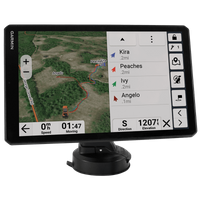
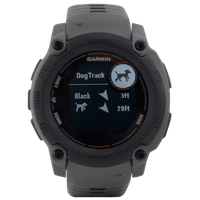
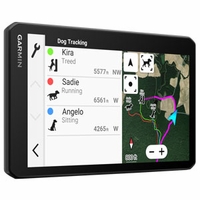
Which GPS Collar do I need: Garmin Astro or SportDOG TEK?This article was written before the announcement of the Garmin Astro 320 and will be updated soon. In the meantime, read my full Astro 320 Review here. -- Steve
In the market for a new GPS collar for serious dog tracking? You're in luck. For the first time in years, you have a choice. While the Garmin Astro 220 GPS system has done a handy job of dog tracking since 2007, SportDOG has introduced its TEK GPS+Ecollar.
To be honest, the Garmin Astro 220 GPS has been a pretty amazing product. Its three versions (DC 20, DC 30, and DC 40) have changed the way we track dogs.
Now SportDOG offers a viable alternative with a totally different spin on GPS tracking. While Garmin's approach tends to lean a little more toward GPS-mapping and tracking history, SportDOG's seems to be a little more dog-based, with more focus on finding your dog quickly.
GPS Only or a 2-in-1 Unit?
Wondering which collar is right for you? It's an easy decision if you must have both GPS and dog training (ecollar/shock collar) capabilities in one handheld unit so that you can track and correct from the same screen -- then the SPORTDOG TEK is for you; it's the only one on the market today that offers two systems in one collar. You even have the option of buying just the tracking part now and adding the ecollar portion later. Because SportDOG is a dog training products company, the GPS part of the TEK is more basic -- it's more about finding your dog quickly than mapping your dog's history.
If GPS is truly important to you, then get a Garmin Astro 220 GPS. Garmin is known for its GPS functionality, so it's no surprise that the Astro is all map-history based. Want to know where the dog is? The Astro shows you a map of the trails that each of your dogs has run. And while the Garmin's base map that comes with handheld unit doesn't have advanced info, you can add mapping options with topographical details, such as major and minor roads, waterways (including lakes, streams, creeks, and rivers), and elevation.
The TEK series does not have any mapping options. It does allow you to mark locations with waypoints, just as the Astro does, but you can't add maps at any point.
After that is when the easy decisions end, and things get more complicated, thanks to the similarities of features between the two devices.
Tracking Range
These two collars are about the same when it comes to tracking range. Both the Garmin Astro 220 and the SportDOG TEK use the MURS (Multi-Use Radio Service) frequency band and work off the same basic principles.
The biggest differences that I have seen in range comes more from differences in the unit update rates. Because the TEK updates faster than the Astro, it shows more accurately when the handheld unit loses the signal from the collar. You notice this difference more when you're tracking from a moving vehicle.
What happens is that the TEK will drop the signal faster because it updates quicker. Typically, I would see the TEK drop the signal, and the Astro would drop it within 5 seconds. While these numbers make it appear that the Astro gets more range, it really doesn't; it just updates slower.
Both the Astro and the TEK series claim 7 miles range in flat open terrain. I have never seen either system actually get that in any situation with any antenna set up.
Power Considerations: Battery Life and Update Rates
After tracking range, the next important consideration is battery life. You want the batteries (especially the collar batteries) to last as long as possible. After all, few things are more worthless than a dead battery on a GPS tracking collar!
Battery life (collar)
Battery life on a GPS collar is mainly based on the update rate, or how often the collar sends its GPS location information via a radio signal to the handheld unit. The handheld then plots these GPS coordinates on the screen so that you can see the location of your dogs.
Most folks want a combination of the fastest possible update rate with the longest possible battery life. Of course, it's a tradeoff: The slower the update rate, the longer the battery life. Likewise, a slower update rate also means that you have longer gaps of time between knowing the exact location of your dog.
Garmin Astro 220 update rate
The Garmin Astro DC 40 collar gets between 20 to 22 hours of run time with a 5-second update rate. (You can improve battery life by slowing down your update rate.)
The Astro DC 40 has four update rate options:
5 seconds
10 seconds
30 seconds
120 seconds
If you slow the update rate, you can extend your collar's average run time.
| Update Rate | Average Battery Run Time |
| 5 seconds | 20 hours |
| 10 seconds | 27 hours |
| 30 seconds | 36 hours |
| 120 seconds | 48 hours |
The Garmin Astro DC 40 collar comes from the factory set with a 5-second update. If you want to change the update rate, you must have the collar in hand. You can't adjust the update rate setting after the dog has left your side.
The SportDOG TEK update rate
The SportDOG TEK series tracking collar gets around 25 hours of run time staring with a 2.5 second update rate and slowing to a longer update rate as the battery becomes depleted. The SportDOG TEK ecollar module runs off of a separate battery, and use of the ecollar won't affect battery life of the tracking collar.
The SportDOG TEK collar combines a faster update rate with a slightly longer battery life. The SportDOG TEK collar starts out with a 2.5 second update rate and doesn't give you the option of changing the update rate. As the battery life gets lower, the TEK collar automatically slows the update rate to conserve battery life.
Runtime Update Rate
| First 10 hours | 2.5 seconds |
| Next 5 hours | 10 seconds |
| Next 10 hours | 25 seconds |
| Total battery runtime | 25 hours |
The advantage of the TEK collar is that while you're hunting (the first 10 hours of the battery), you have the fastest possible update rate -- 2.5 seconds. After 10 hours, the collar slows the update rate to stretch out the battery life. The unit assumes that after you've passed the 10 to 15-hour mark, you're no longer hunting and are looking for a lost dog.
The downside of this TEK feature is that you don't have control over the update rate. While most folks don't want slower updates, they do want longer battery life. The Astro allows you the option of longer life if you require it.
The other thing to keep in mind is that with the way the TEK collar goes about setting the update rate, you're really required to charge the collar every time you go hunting. If you don't, you'll have a substantially slower update rate on your second day of hunting compared to the Astro. I don't see that as a big issue because I recommend that you charge your GPS collar before each hunt for maximum battery life, but I know folks that will run an Astro two or three days without recharging it.
Battery life (handheld unit)
The batteries in the collar aren't the only ones to worry about. Both handheld units also require batteries:
The Garmin Astro 220 handheld runs off of 2 AA-batteries and gets around 20 hours of run time per set. The time can vary depending on your use of the backlight feature. You can also use lithium AA-batteries in the Astro 220 Hand held for longer life.
The TEK handheld is rechargeable and gets around 20 hours of run time off a single charge. The handheld battery life is very much based on how often you press buttons and whether or not you use the backlight screen.
Garmin Astro 220
The Astro has a battery saver option that will cut off the backlight after you go a period of time without pressing a button. You can select several timeout options between 15 second and 2 minutes, or you can leave the backlight on all the time.
You can also purchase a power supply that will run your Astro while you're using it in your vehicle. This power supply will bypass your AA batteries and power the unit from your 12-volt car plug. Keep in mind, though, that running this power supply will not charge your AA batteries.
SportDOG TEK
Like the Garmin Astro, the TEK handheld has timeout options for the backlight from 30 seconds to 90 seconds. You also have the option of leaving the backlight on all the time.
The TEK will power down the handheld if you haven't pushed any buttons for an extended period of time. This automatic feature is designed to save you from accidentally running down a battery. The power off option allows you to select between 1 hour, 2 hours, and 3 hours of no activity. You also have the option of leaving the handheld unit on all the time, but here's a warning: I have run down a lot of AA batteries in my Astro handheld by accidentally leaving the unit on while it sits in my truck overnight. I can remember to cut my collars off, but I always forget to cut off my handheld, and it's really irritating the next morning.
The downside of the TEK handheld being rechargeable is that it can run out of power in the field, and you'll have no way to track your dog. With the Astro, you can replace AA batteries in the field and continue to track them with zero down time.
I strongly recommend that anyone using a TEK system either purchase a car charger or have a power inverter and carry their wall charger in their vehicle to avoid this issue, especially when you're trying to locate a lost dog. You can track with the TEK handheld while it's plugged into the charger. And unlike the Astro, the TEK car charger will charge your handheld batteries while in use.
Chargers
One of the biggest improvements when Garmin went from the DC 30 to the DC 40 was the addition of a charging cradle. The DC 40 collar snaps into a cradle when you need to charge it. No plug holes fill with grime, mud, or dirt. Charging is fast and easy. It takes around 4 hours to get a full charge on the DC 40 collar from a fully drained battery.
The SportDOG TEK collar requires that you plug directly into the collar. It has a separate charging port for the tracking portion, the ecollar portion, and the handheld. Each collar comes with a three-way charging plug so that you can charge all three parts at the same time from one wall plug. Because the ecollar and the GPS are separate from each other, they have separate batteries and require separate charging.
The TEK collar and handheld each have a mud plug to help keep the grime out, but you need to watch it closely and make sure that it stays clean. You can rinse out the plug with water or compressed air, if needed.
It takes about 2 hours to get a full charge on the TEK units from a fully drained battery.
Replaceable batteries
Both the Garmin Astro DC 40 collar and the SportDOG TEK collar and TEK handheld use lithium ion rechargeable batteries. A typical lifespan on this type of batteries is between three to five years. I find that the more often you use these batteries, the longer they'll last. You should charge your system every few months when it's not in use to extend the life of your batteries.
The Garmin Astro DC 40 collar has user-replaceable batteries that you can buy and replace. The only tool you'll need is a screwdriver.
The SportDOG TEK collar batteries are not user replaceable, but they are replaceable. You must return the collar to SportDOG in Knoxville, Tenn., for battery replacement.
Using the Unit
Sure, you've considered tracking range and battery life. But what good is a powerful range and long-lasting batteries if the unit isn't, well, very usable? You want a tracking screen that rocks, multiple-dog capabilities, and additional GPS functions. Here's how these two collars measure up.
The Garmin Astro 220 dog tracking screens
Garmin Astro 220 has two screens for viewing the location of your dog:
This is the Garmin Astro 220 COMPASS Screen

The compass screen gives you a line that points to your dog and tells you his distance from you and his status (moving, on point, treed, or sitting). In the compass screen, you can view up to three dogs at one time. Using your up and down arrow, you can view other dogs if you're tracking more than three dogs. You also have a menu option called Big Numbers that allows you to change the size of the dog's name and location reading. (You can view only one dog at a time when you use this option.)
This is the Garmin Astro 220 MAP Screen

In the map screen, you can see the location of your dog and the dog's track, which shows where he has been. You can also see your trail, the tracks of all your dogs, and any icons or waypoints that you've marked on your unit.
These are Garmin Astro 220 WAYPOINTS

If you have added a topo map card to your handheld, you will see this info on the map screen along with your dog's info. Adding a topo map allows you to see roads, waterways, creeks, rivers, and elevation changes.
While the compass screen will show you distance and status, it won't show you the direction that the dog is moving. To see direction, you must move to the map screen and watch the dog's history track to see the direction that the dog is headed.
You can switch back and forth between the screens using the Dog button (compass screen) and the Map button on the front of the handheld.
The advantage of the Astro over the TEK is that you have a history of what your dog has done. It tells you where your dog has been and how he covered the ground. The problem, though, is that the Astro screen can get so crowded with history that you can no longer tell where your dogs are currently or which way they're going. I often clear my map screen while in the middle of a hunt just so that I can locate my dogs and tell which direction they're heading.
With the Astro, you have to move back and forth between the screens to know exactly what your dog is doing. From the compass screen, you can get distance, but you can't tell the direction if he is moving. From the map screen, you can see the direction he is moving, but you can't tell the exact distance.
SportDOG TEK dog-tracking screen
The SportDOG TEK tracking screen shows your dog, the direction he's moving, dog status (pointing or treed) and distance from you, and battery life.
This is the SportDOG TEK Tracking Screen

The icon for the dog is an arrow. The arrow is pointing in the direction that the dog is moving. A cross-hair in the lower middle section of the screen marks your location. At the bottom of the screen is a listing of all the dogs. Next to the dog's name, you can see its distance from you, your collar's battery life, and the stimulation settings (if you allow stimulation from the tracking screen).
The TEK doesn't show any kind of trail or history of where the dog has been. You can see the direction that the dog's moving in, and you can see when he changes directions based on the direction of the arrow.
"Dog 1 is in front of me and he is moving to the right, at 300 yards."
"Dog 2 is behind me and he is going away from me at 50 yards."
"Dog 3 is on point 100 yards to my left."
Having a screen that shows only the dogs and the direction that they're moving without a trail is very clean. Because the TEK has only one screen, I've also found it to be much quicker as far as looking at the screen and knowing exactly where your dog is and which direction he's moving.
SportDOG TEK's auto screen is my favorite feature
This is the SportDOG TEK AUTO Screen

One of my favorite features on the SportDOG TEK tracking screen is the Auto mode. When you put your screen into Auto mode, it keeps up with the location of all your dogs and automatically adjusts the scale so that you can see every dog, no matter how far it gets from you.
So if you have got a close dog, a medium dog, and a far dog, the screen will expand automaticly so that you can see all three dogs. If you want to hone in on just one dog or if you want to control the display yourself, you can. The Auto feature just gives you everybody in one shot.
The downside of the Auto feature is that your dogs can get away from you quicker than you realize because the far dog is always still on the screen.
On the Astro Map screen, it's pretty common for one or more of you dogs to drop off the screen. To keep up with them all, you have an In button and an Out button. You have to change the screen scale yourself until you have them all on the screen, which can be a real pain.
Number of dogs per unit
Both systems are designed to track multiple dogs at one time. The Garmin Astro 220 can track up to 10 dogs per handheld. The SportDOG TEK can track up to 12 dogs per handheld.
You can purchase both systems as a 1-dog unit, and you can buy additional collars at any time.
Number of tracking channels
The Garmin Astro 220 has 50 channels to track individual dogs. If another user comes in to the area where you're running your dog and is on the same channel, the Astro will warn you and give you the option of changing to another channel. Interference can become a major issue in large hunting clubs and organized events with hundreds of dogs.
The TEK system has over 2,000 tracking channels.
Additional Garmin GPS functions
The Garmin Astro 220 is a fully functional GPS unit and has some of the most advanced features available in a handheld GPS. Some of these options include
Sunrise/sunset times by location
Hunting almanac
Clock
Compass
Altimeter
Calendar
Calculator
Stopwatch
Most of these features really don't play a big role in tracking a dog, but I do like the ability to mark locations of a covey of quail with icons.

Astro marking abilities
The Astro has a Mark button on the front of the 220 handheld, and it allows you to mark a location and store it in your handheld. You can also download these locations to your computer to view on Google Earth. When you press the Mark button, you can select from several choices, including flag, covey, truck ATV, lodge, camp, blind, or tree stand. Each item has a specific icon. You can also pick from dozens of other icons to mark the location.
One of my favorite features on the Astro is Start a New Hunt. This option allows you to clear all previous dog tracks and mark the location of your truck before you start a new round. Because you have one only truck, it clears the old truck icon when you mark a new one.
TEK GPS capabilities
The TEK handheld has some GPS applications but is very limited compared to the Garmin Astro. The TEK has a compass and a clock.
You also have the option of marking a starting point when you begin a new hunt. Marking a new starting point will clear the previous starting point.
The TEK handheld can mark up to 20 waypoint locations. Once you reach 20, you must remove one of the old ones to add a new one.
Factoring in Price and Warranties
You're close to making a decision, but you may want to consider a couple more details: price and warranty. Of course, you want everything, but you don't want to pay an arm and a leg for these features. And you want a warranty you can count on.
Here are the costs today:
| Unit | Cost of Unit | Cost for additional collar |
| Garmin Astro 220 with DC 40 | $599.99 | $199.99 |
| SportDOG TEK handheld + tracking only | $499.95 | $199.99 |
| SportDOG TEK handheld + tracking and training | $699.95 | $359.95 |
Both systems are covered under Gun Dog Supply's 30-day money-back guarantee. I expect you to use the system in the field on your dogs. What's nice about both these systems is that you will know pretty fast whether it's right for you or not.
If you have any issues after the first 30 days that I can't resolve over the phone, I bring in the manufacturers for help.
The Garmin Astro comes with a one-year manufacturer's warranty.
The SportDOG TEK comes with a two-year manufacturer's warranty.
|
© 2013 GDS
|